Traditions
5 October 2026
How to Stay Safe During Hunting Season in France: A Local Hunter’s Guide
A Provence hunter explains battues, warning signs, dog safety and practical ways to share the countryside during hunting season.
Read more →
14 March 2026
A few kilometres from Mouriès, a trail leads into the Alpilles - and 2,700 years of silence, written in limestone.
Les Alpilles · Mouriès · Provence
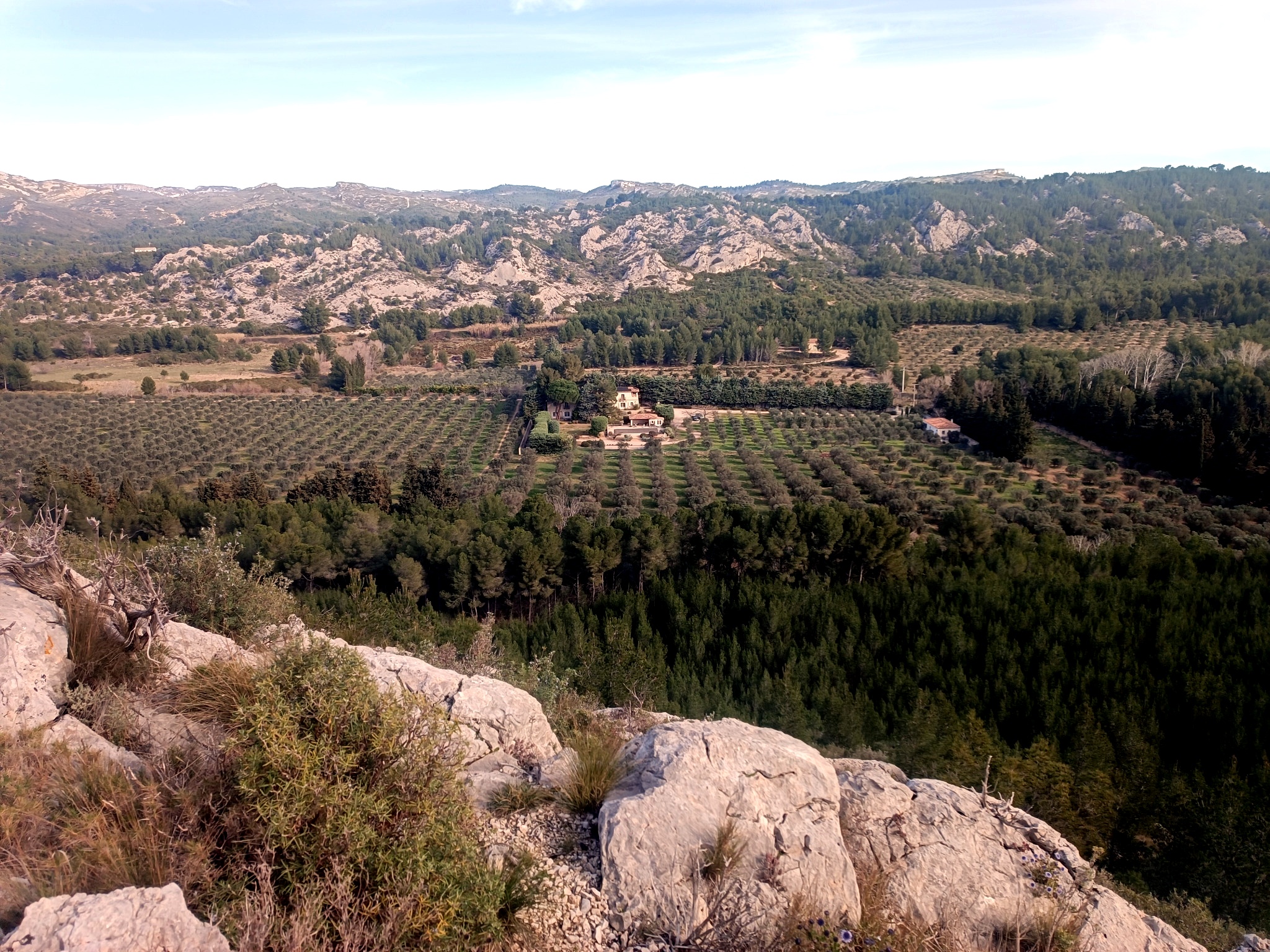
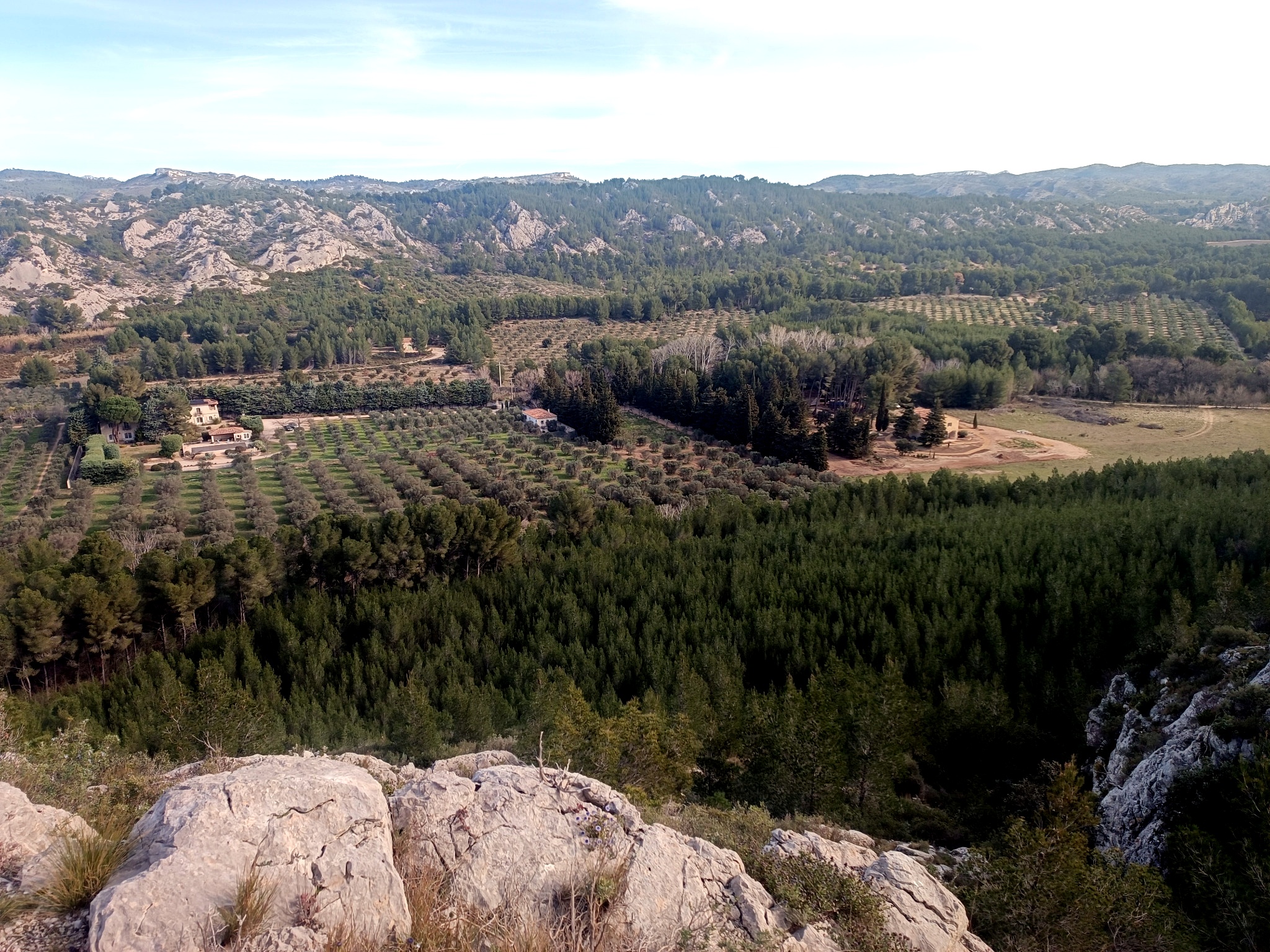
A few kilometres from Mouriès, a trail leads into the Alpilles. Follow it long enough, and the hills close in around you - the world narrows, the limestone rises, and the centuries begin to dissolve.
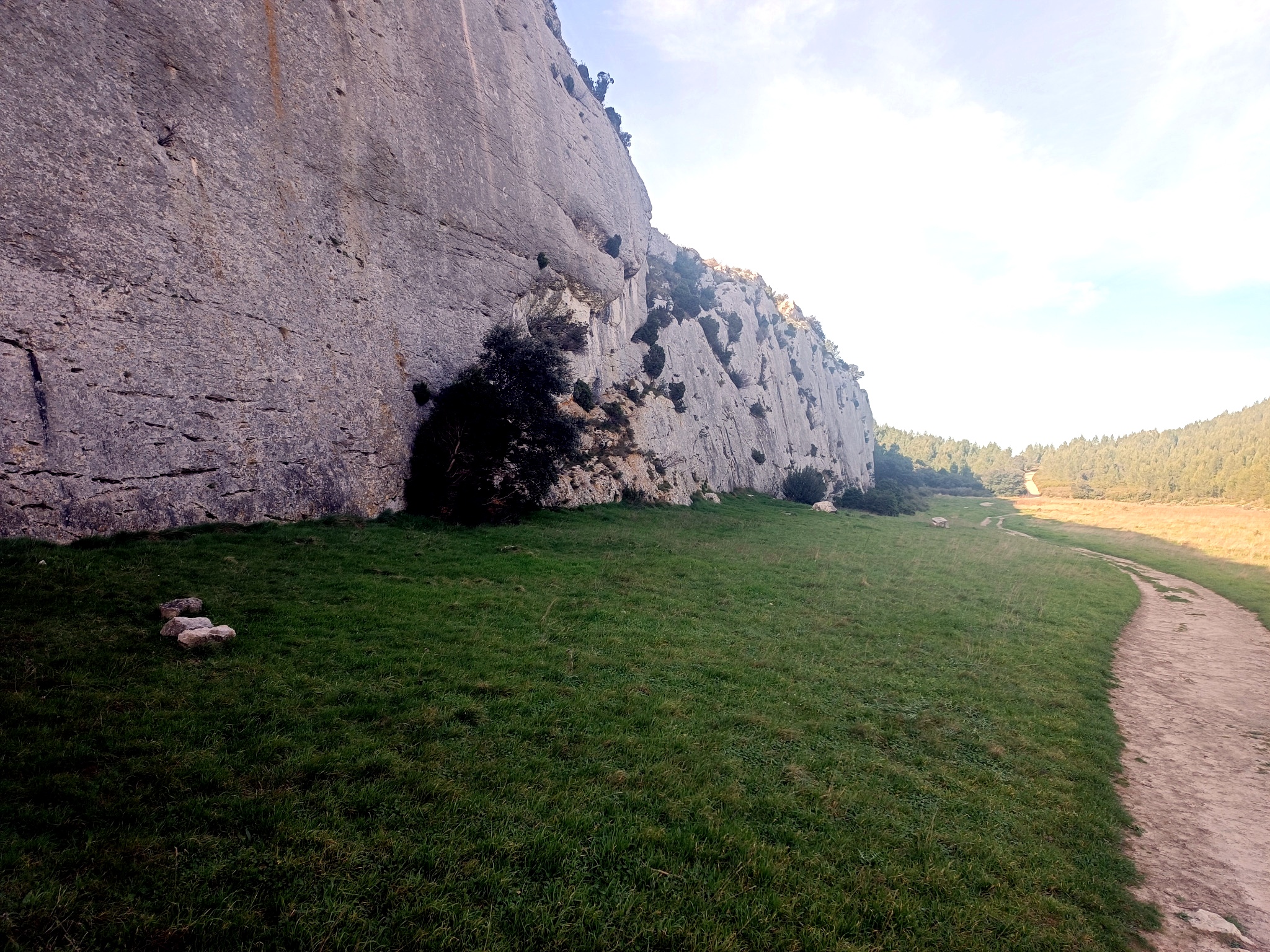
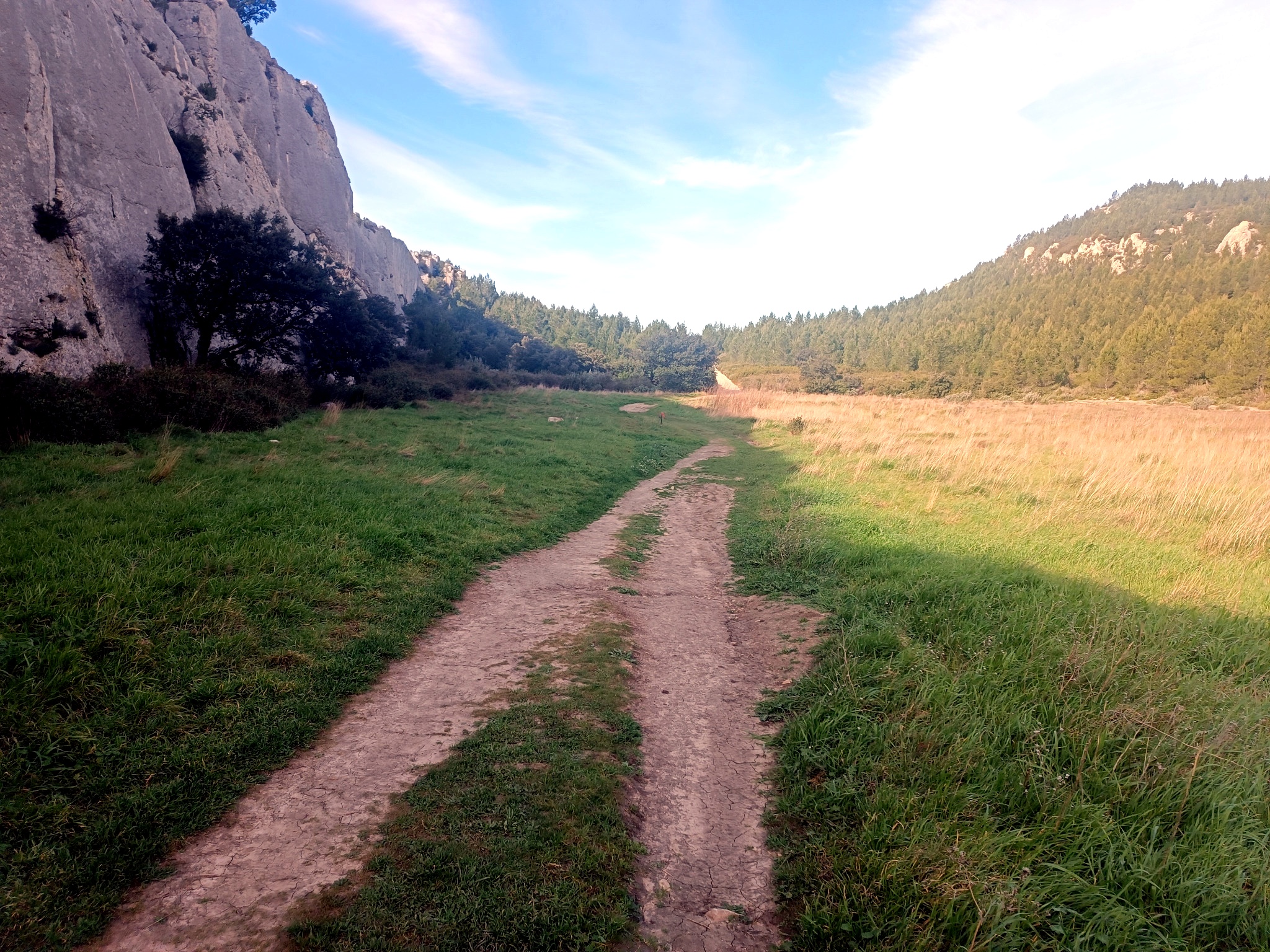
The walk begins simply enough - a dusty track winding away from the golf course at Servanes, past rosemary and scrub oak, with the jagged ridgeline of the Alpilles rising ahead. The air carries the dry warmth of Provence: thyme crushed underfoot, the distant call of a blue rock thrush tucked into a crevice. There is nothing yet to suggest the extraordinary.
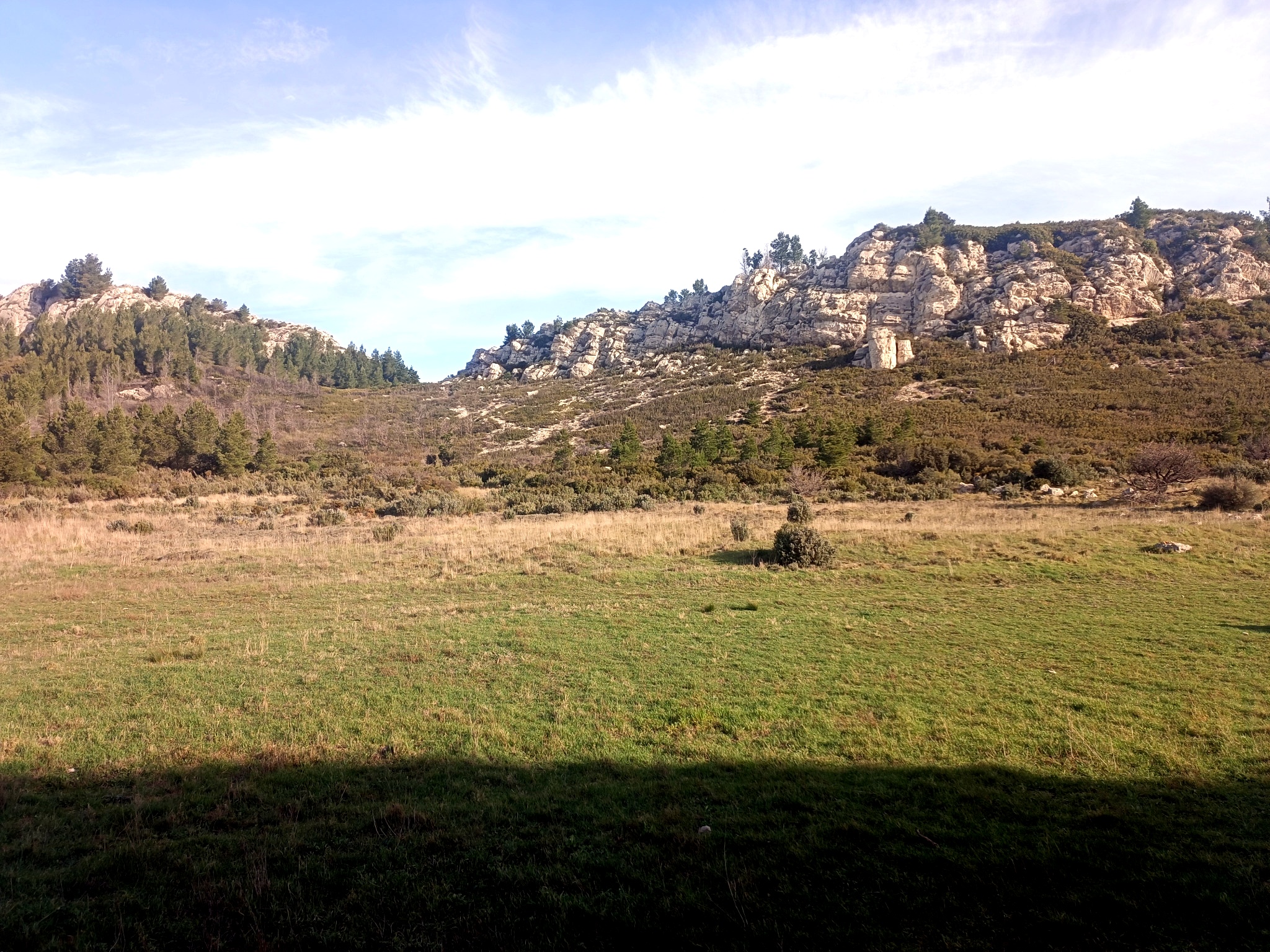
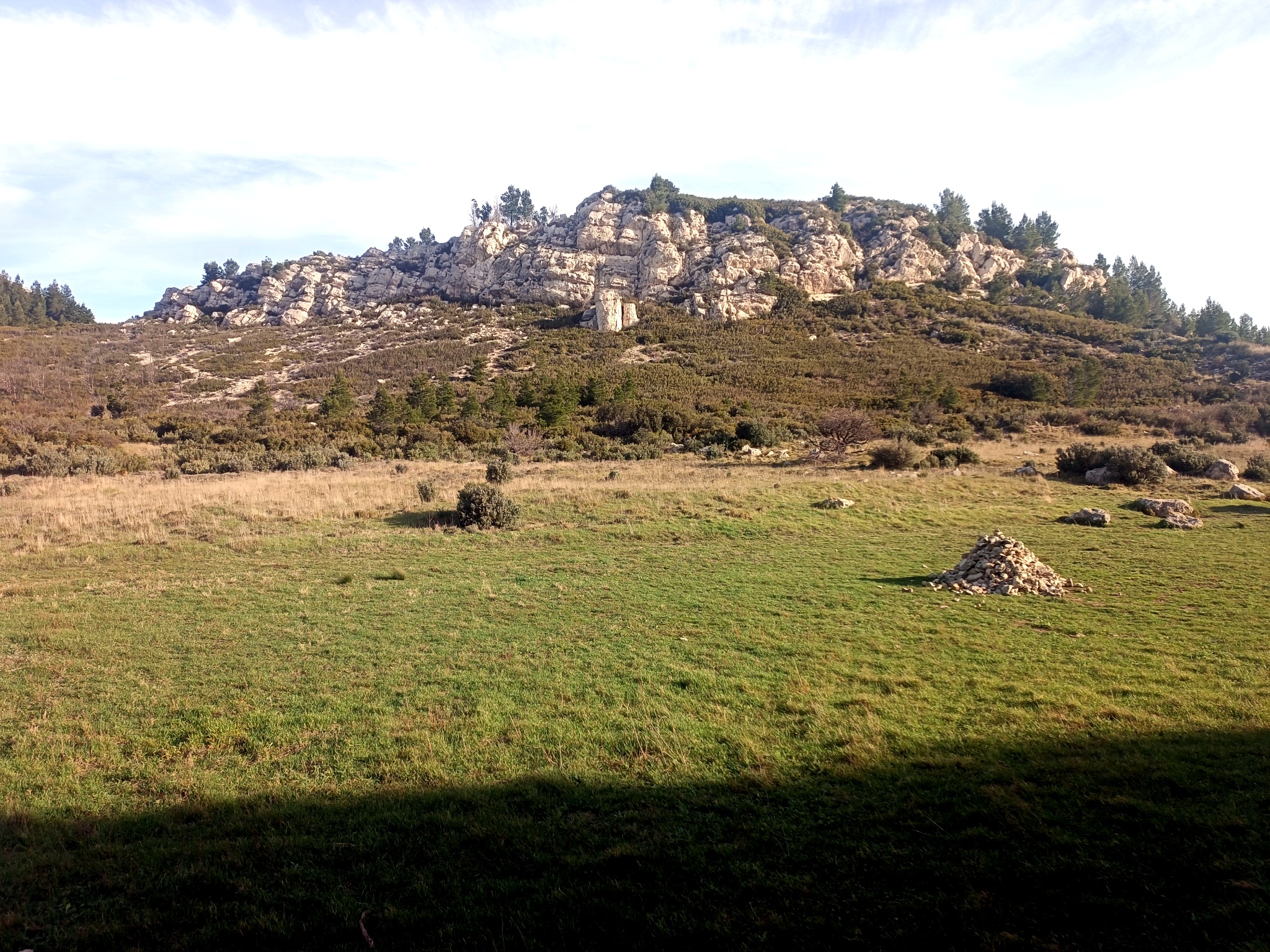
Then the valley begins to narrow. The limestone walls tighten on either side - pale, ancient, scored by millennia of wind and rain - until you feel the landscape leaning in. The entrance to Les Caisses de Jean-Jean is almost comically slender, a gap between cliffs that a determined man could defend with nothing more than courage and a good throwing arm. It is precisely for this reason that someone, long ago, decided this place was worth living in.
Step through, and the world opens again - but changed. You are now inside something. A great stone box. Two parallel limestone ridges run on either side like the walls of a cathedral, closing at the eastern end to form a natural acropolis. The French word caisses - crates, or boxes - captures it perfectly: you are standing at the bottom of a vessel carved by geology and occupied by history.
14 ha
Ancient settlement
700 BC
Earliest occupation
~1,000
Inhabitants at peak
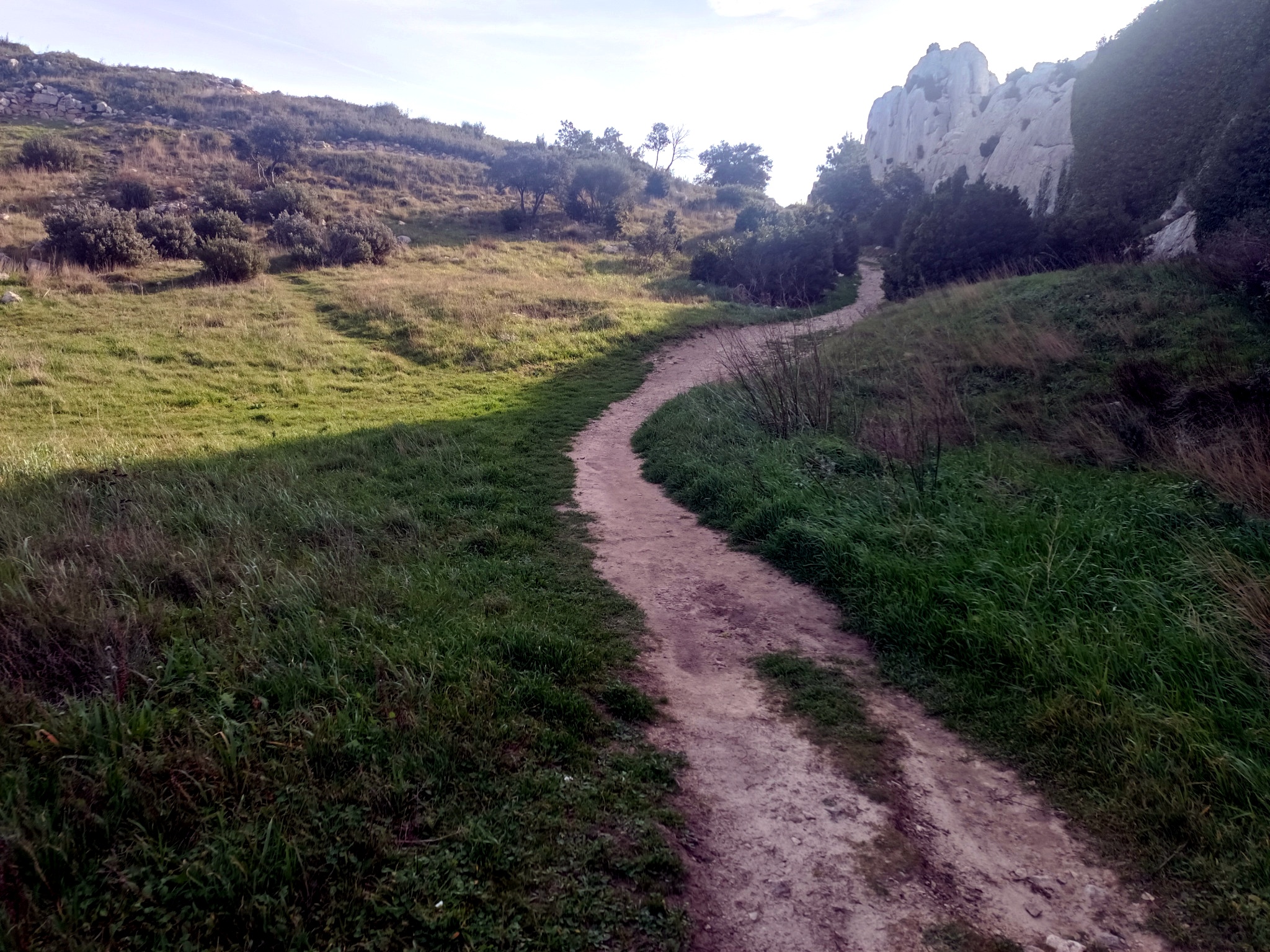
Around the 7th century BC, in what archaeologists call the Iron Age, a Celtic people settled here and began building. What they created was an oppidum - a fortified hilltop village - one of the most intelligently designed in all of southern Gaul. They did not need to fight the landscape; they let the landscape fight for them.
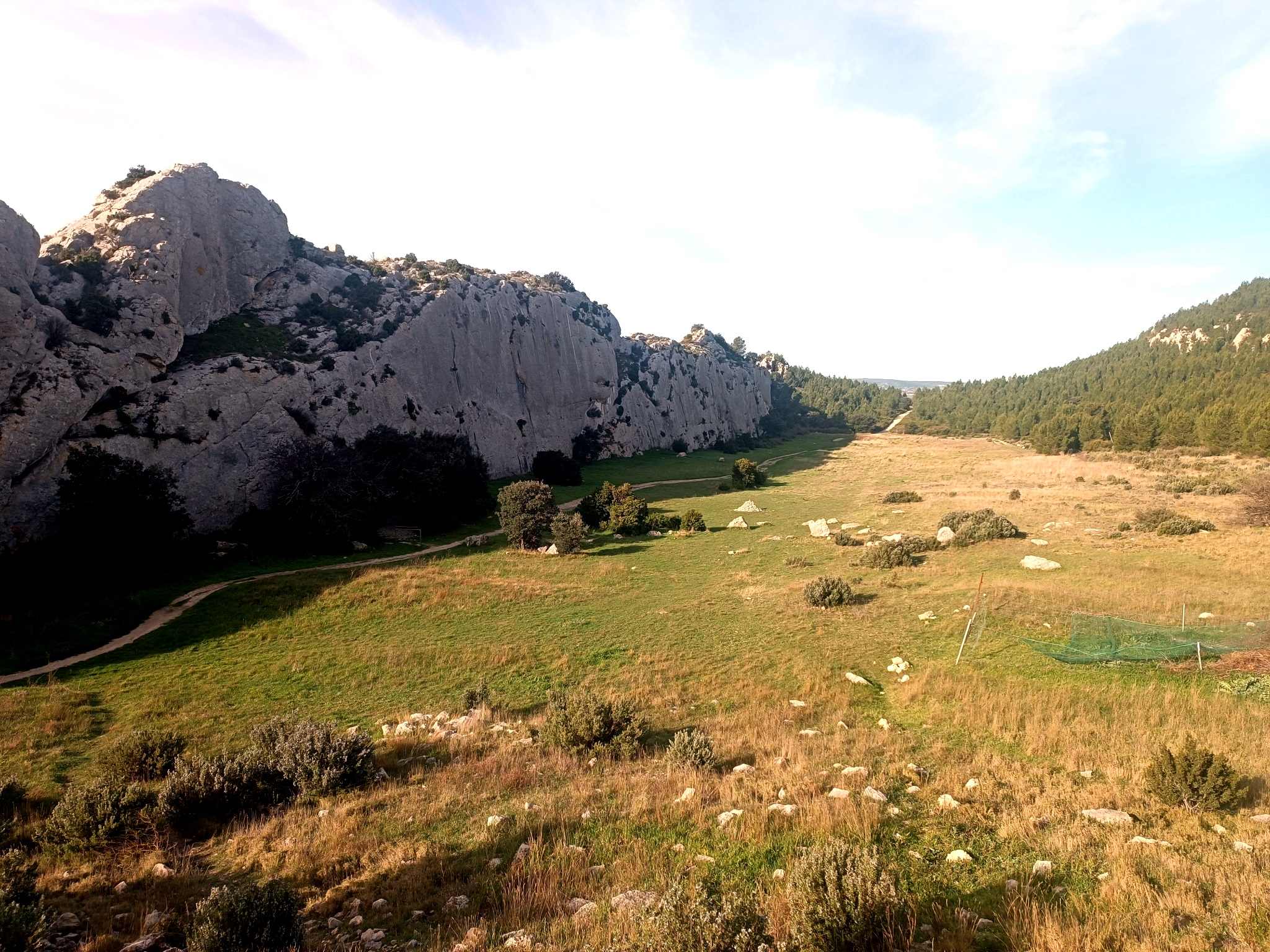
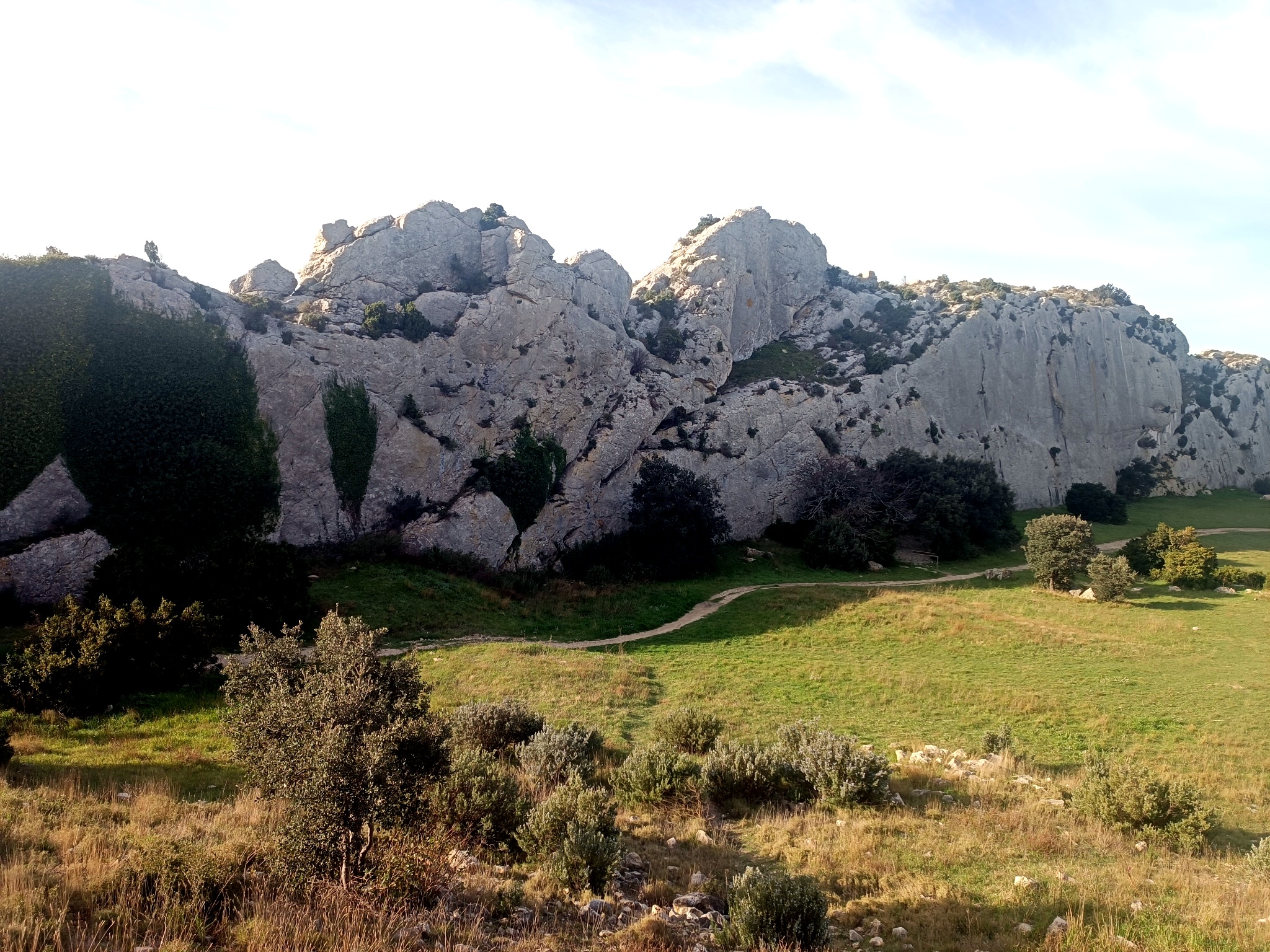
Nature had already provided two impregnable walls in the limestone cliffs to the north and south. The genius lay in what the settlers added at the western entrance - the only approach not sealed by rock. There, they raised not one rampart, but two, rebuilt and reinforced across centuries until the outermost wall grew to more than ten metres thick. Visitors walking the site today still encounter it as a looming earthen ridge that seems, improbably, to be a natural hill - until you realise it is entirely man-made, a colossus of stacked limestone, packed earth and compressed time.
Between the 4th and 3rd centuries BC, the builders did something remarkable: they dismantled an older sanctuary on the site and reused its carved votive steles as raw material for the rampart's core. These stones - engraved with the image of a horseman carrying a javelin, the symbol of a warrior conducted to the afterlife - were buried inside the very walls meant to protect the living. Sacred objects, repurposed as mortar. Whether this was an act of pragmatism or a deliberate consecration of the fortifications, we will never know.
Walking the site today, one stands before what appears to be a natural hill rising between the cliffs - until the realisation dawns that it is entirely the work of human hands, a monument built generation by generation over six centuries.
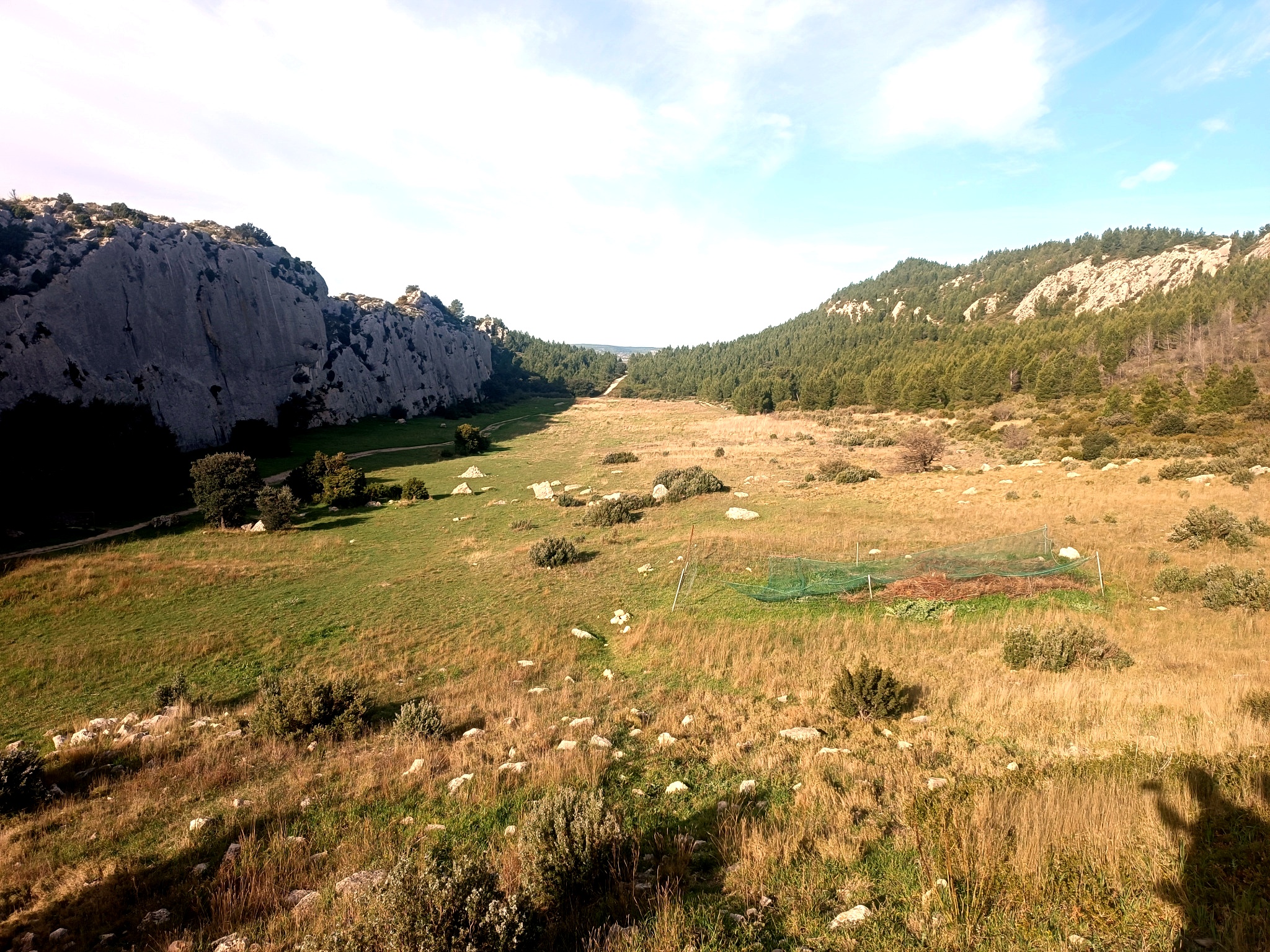
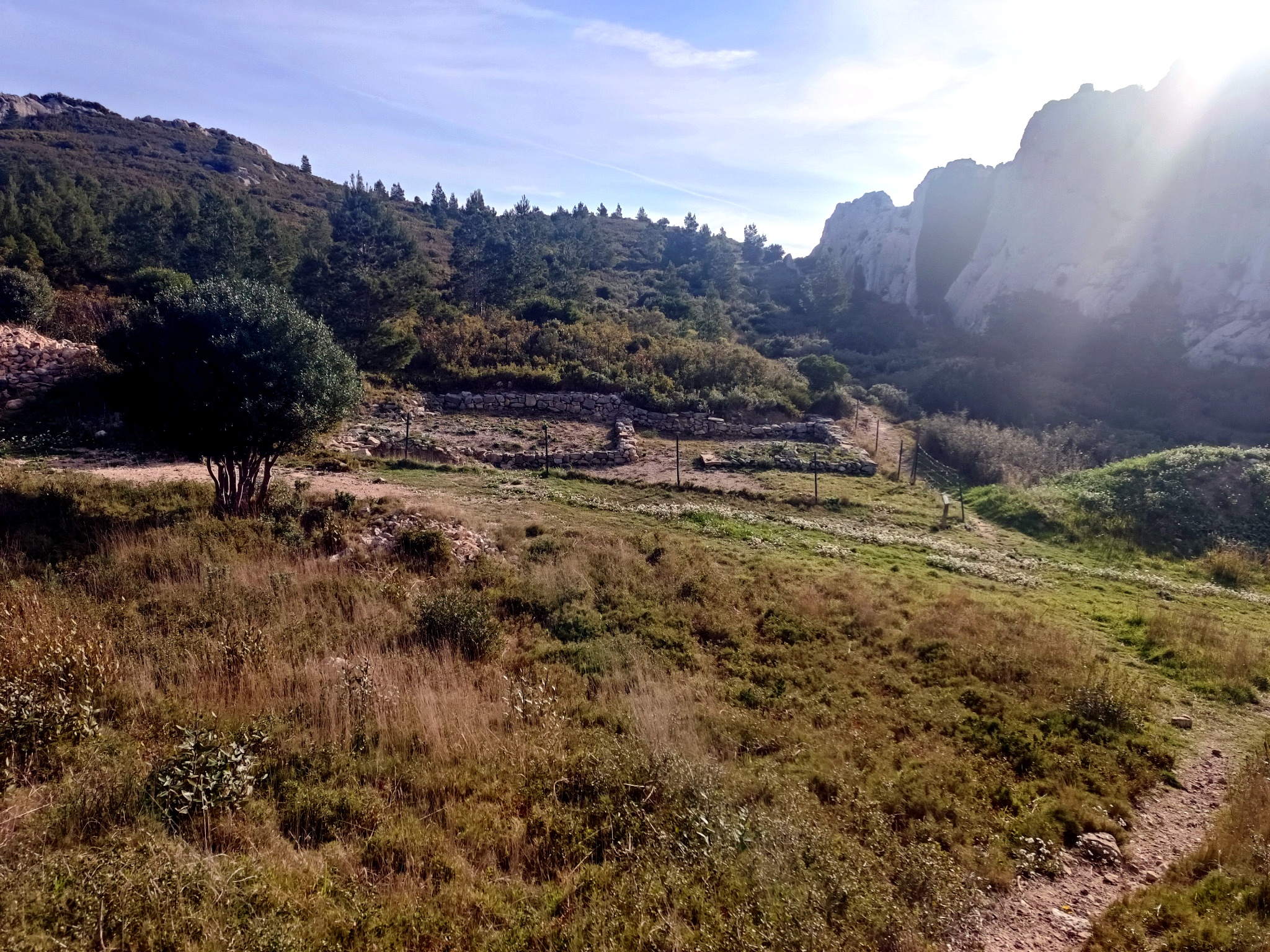
In front of the ramparts, the inhabitants dug four successive ditches alternating with earthen embankments, and lined the approach with a jagged palisade of projecting rocks. Any attacker who breached the first trench would face another, and another. The entrance itself was cunningly angled so that an approaching enemy could never charge in a straight line, always exposed to defenders on the walls above.
At its height, roughly a thousand people called this stone valley home. Archaeological excavations between 1933 and 1942 by Fernand Benoit revealed the true scale of the settlement. The site covers roughly fourteen hectares and may have supported close to a thousand inhabitants at its peak.
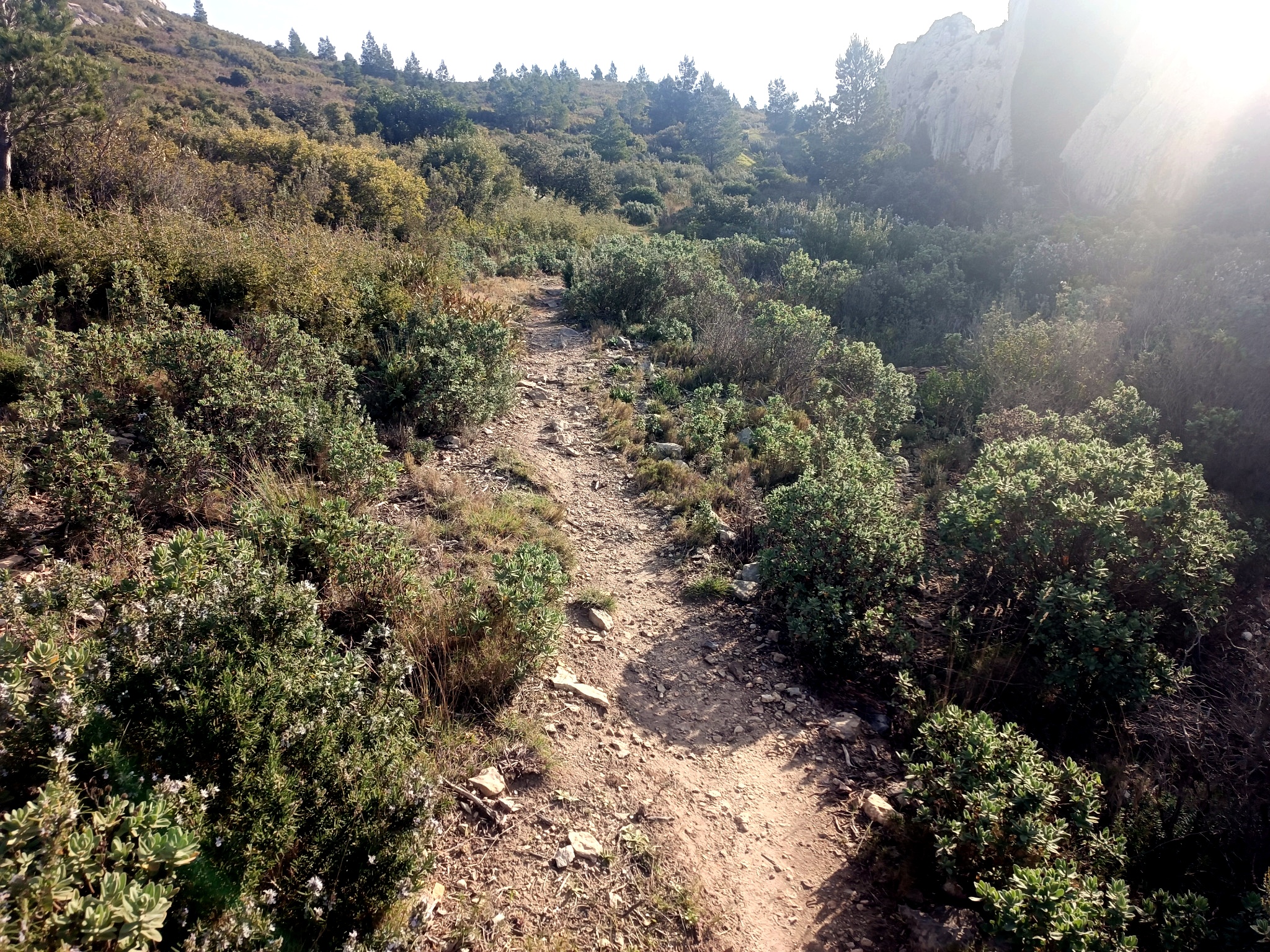
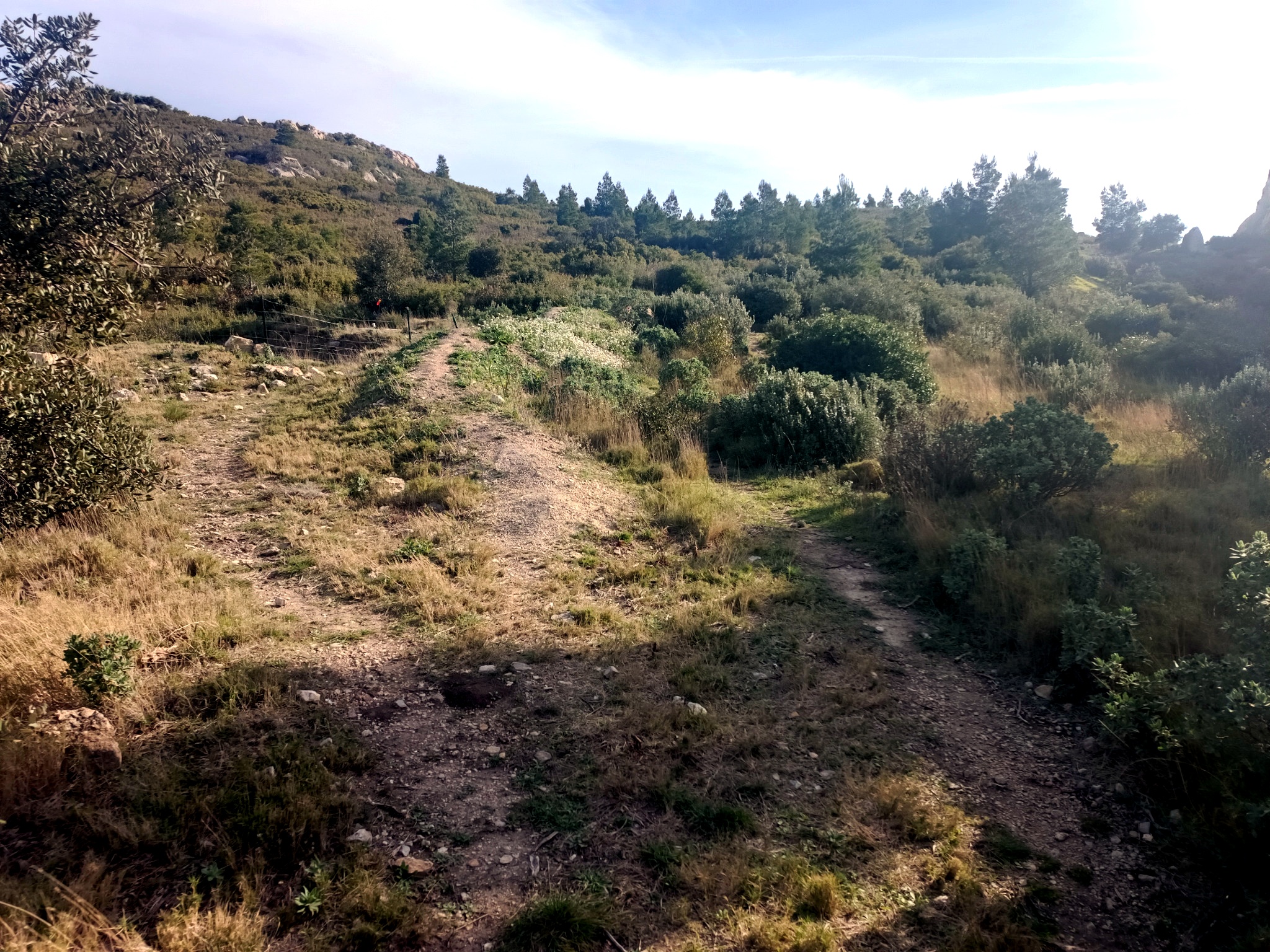
Archaeologists have uncovered houses arranged in terraces against the cliff faces, their walls bonded with earth and later, as Hellenistic influence filtered up from Massalia (Marseille), with dressed limestone cut in the manner of the Greeks. Ceramic shards tell of trade - wine amphorae from Italy, fine-ware cups from the Greek colonies of the coast. This was no isolated backwater but a community woven into the commerce of the ancient Mediterranean world.
At the foot of the southern cliff, an enormous millstone - over a metre across and weighing an estimated 1,600 kilograms - still sits unfinished in the living rock, abandoned mid-cut sometime in the 17th century. It is a haunting detail: the interrupted work of someone who laid down their tools one afternoon and never returned. Time has a way of doing this, collecting the paused gestures of the past and holding them perfectly still.
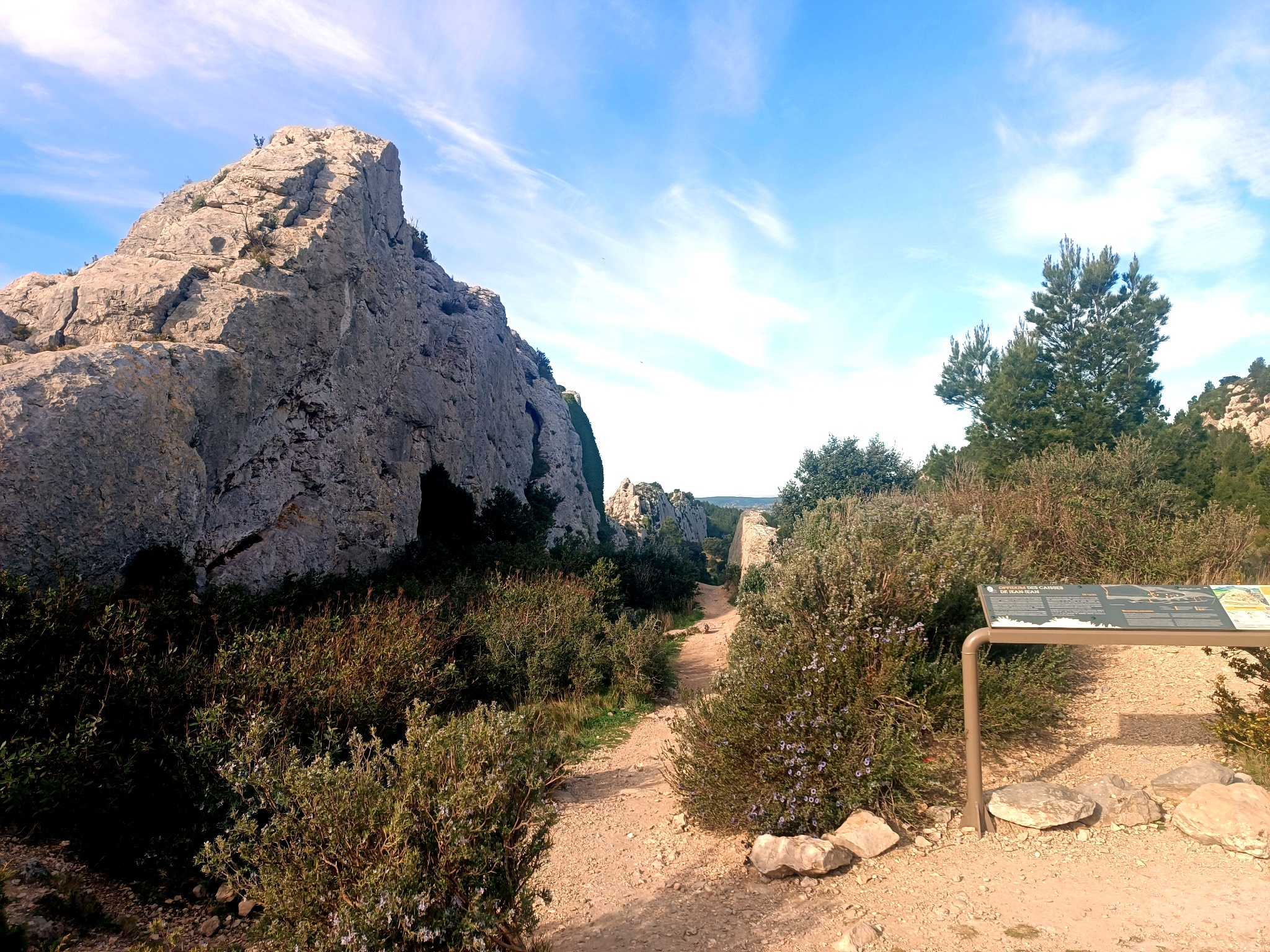
The settlement endured for nearly a millennium - from the Iron Age through the full arc of Roman conquest and into the 3rd century AD, when the inhabitants gradually drifted down into the plain below to occupy the Roman villas spreading across the Crau. The hilltop was left to the wind, the wild lavender, and the slow patient work of the limestone.
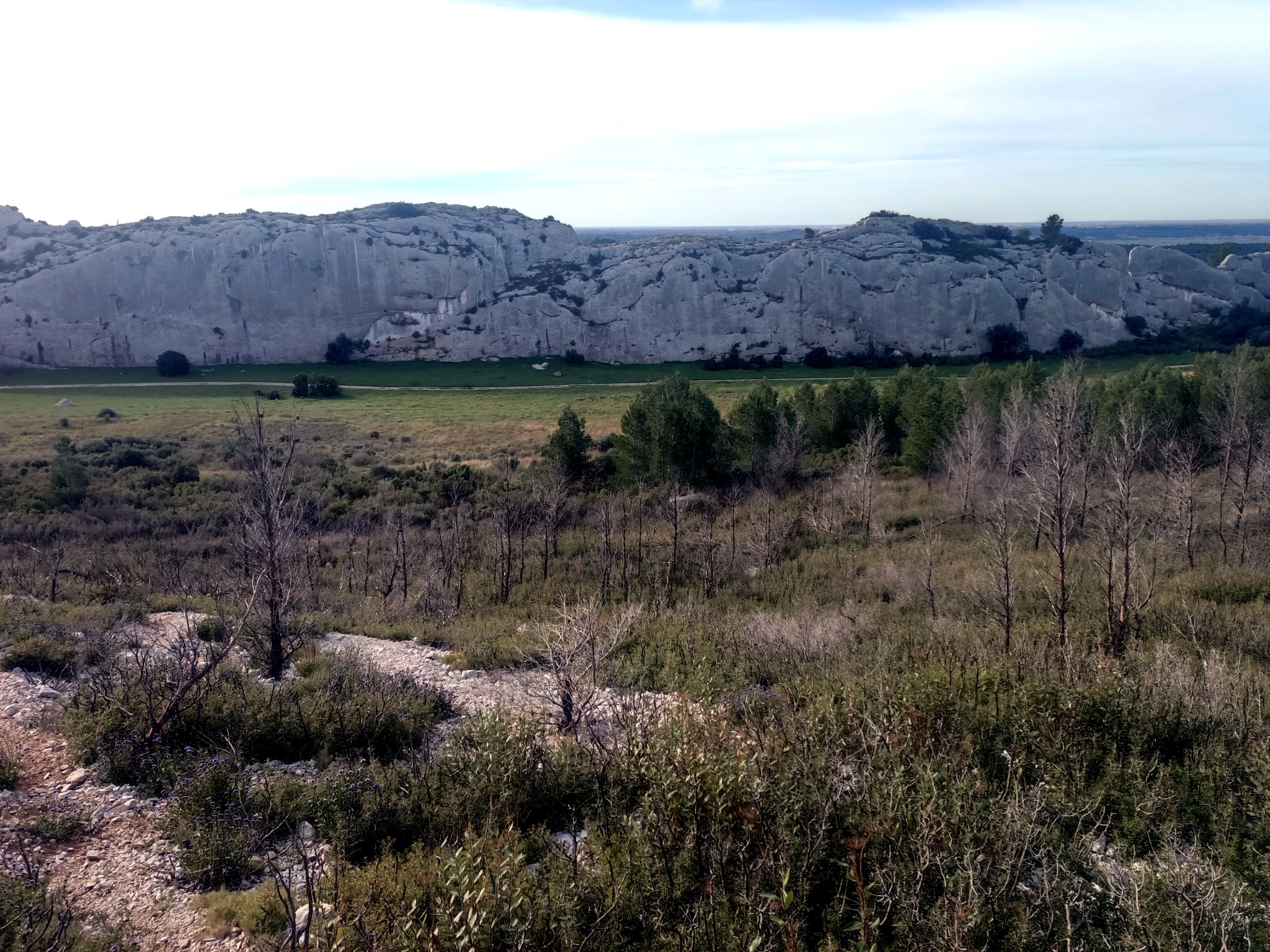
Standing inside the Caisses today, what strikes you most is not the archaeology - it is the silence. Not an empty silence, but a full one, weighted with presence. The cliffs hold the air still. The light falls at an angle that has not changed in three thousand years. And the mind, stripped of easy distraction by the simplicity of the landscape, begins quietly to people the place: a child running along the base of the rampart; smoke rising from a cooking fire; the sound of a hammer shaping stone; someone standing at the entrance to this narrow valley, looking west, watching.
The name of the site carries its own small history. It derives from a man called Jehan who once owned these lands, and his son - also Jehan - after him. In the local dialect, the "lands of Jehan, son of Jehan" became simply Jean-Jean, the name of a property becoming the name of a civilisation. There is something rather beautiful in that: an Iron Age oppidum remembered not by its ancient Gaulish name - possibly Tericiae, which once appeared on Roman road maps between Aix and the Rhône - but by the name of a medieval farmer who happened to graze his sheep here.
The Alpilles have always done this - absorbed history quietly, layer by layer, the way the limestone absorbs rain. A sanctuary becomes a rampart. A rampart becomes a hill. A hill becomes a walk one afternoon in the Provençal sun, with the scent of wild herbs rising around you, and the sudden, vertiginous sense that you are very small, and the world is very old, and some places hold their past more tenderly than others.
Les Caisses de Jean-Jean is one of those places.
Les Alpilles · Bouches-du-Rhône · Provence · Classified Historic Monument 1937 · Parc Naturel Régional des Alpilles
🐸 Marcel says:
Go in the morning, before the heat. The light inside the valley is extraordinary at eight o'clock, and you will almost certainly have the place to yourself.
Loading comments...
Get new articles from Provence delivered to your inbox.
5 October 2026
A Provence hunter explains battues, warning signs, dog safety and practical ways to share the countryside during hunting season.
Read more →
30 June 2026
A 5:40am start, a field stolen by a private photoshoot, a melting sorbet incident, and the afternoon Provence finally decided to smile on us.
Read more →
22 May 2026
Getting four semi-conscious family members into a car before sunrise, a daughter who became a tourist attraction, and the lavender crème brûlée I am still trying to recreate.
Read more →